What Does a Leadership Consultant Actually Do? (And When You Need One)
October 29, 2026


As an organization grows or changes, it can be easy to overlook or become complacent about leadership. The processes that worked when the business was smaller might not fit the company's next iteration. New roles, bigger teams, and new priorities expose gaps the old way of working used to cover. Eventually, leaders can find themselves spending more time navigating complexities among people, processes, and decision-making than moving the organization forward.
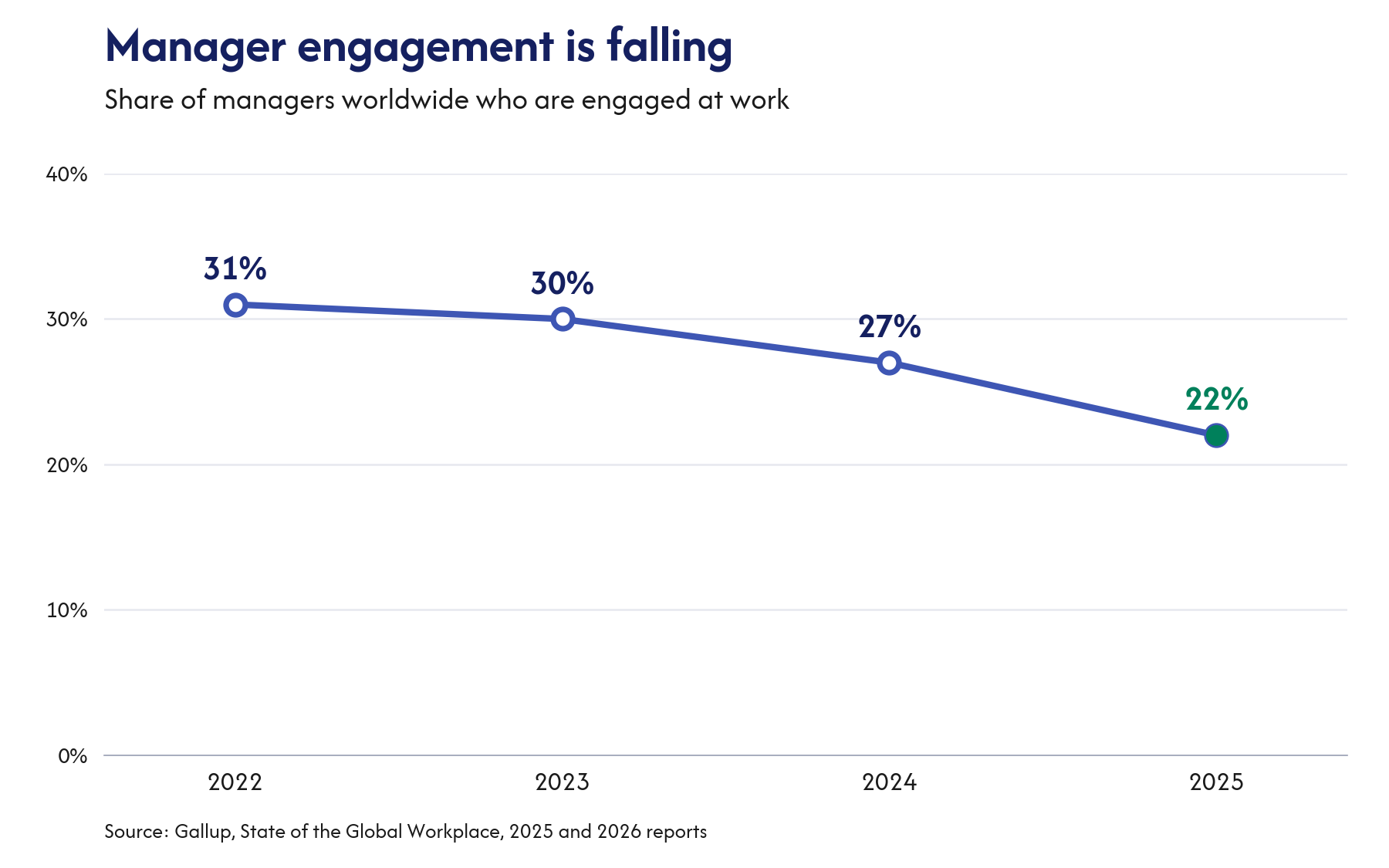
Many organizations are feeling this right now. Gallup’s State of the Global Workplace 2026 report found that manager engagement fell to 22% in 2025, down from 31% in 2022. When the people expected to carry leadership are stretched that thin, it tends to show up across the whole organization.
This is where leadership consulting can help, but you need to know whether it is the right fit for your organization or whether a different internal fix is more effective.
Here’s what leadership consultants actually do, and how to know whether your business needs one.
In simple terms, leadership consulting helps when an organization's leadership no longer keeps up with what the business needs. Consultants help organizations strengthen how teams and leaders make decisions, collaborate, manage change, and turn strategy into meaningful action.
Typically, a leadership consultant looks at the bigger picture rather than an individual or a single skill. They aim to understand what’s hindering performance and identify gaps in leadership capability, then develop practical approaches for real scenarios to address them.
Sometimes that means adding a process. Just as often, it means removing one that slows decisions down, or improving one that already exists. A good leadership consultant helps leaders clarify expectations, build accountability that holds after the consultant leaves, and design programs that support both short- and long-term goals.
That work matters more as the expectations placed on leaders grow. The World Economic Forum’s Future of Jobs Report 2025 lists leadership and social influence among the top 10 skills employers expect to grow in importance through 2030.
Each brings something different to the table.
A leadership consultant works at the level of the whole system. They diagnose organizational challenges, bring an outside perspective, ask difficult questions, and help leaders decide what needs to change. They will then develop an organization-specific plan that connects leadership development to business priorities.
An executive coach works with one leader at a time, helping that person strengthen their judgment, self-awareness, communication, and overall effectiveness. Once leaders recognize their patterns, they practice new approaches in real work situations.
A leadership trainer builds specific skills across a group. They cover whatever’s needed, including giving feedback, navigating difficult conversations, delegating, and holding others accountable.
Many challenges need more than one of these. At Luminate, we work across all three, and the mix depends on what’s actually getting in the way. Leadership capability must develop at the individual, team, and organizational levels for meaningful change to last.
How can you tell when leadership needs more structure and support? You’ll likely start to see challenges across the entire organization, not just within a specific team.
One sign may be manageable on its own. Several at once usually point to something structural, and that’s where an outside view helps most.
Not every leadership challenge requires outside support.
If the problem is specific and well understood, you may have enough internal resources to break the pattern, especially if your HR or learning and development team has the expertise, capacity, and organizational support to lead the work. For example, if new managers need help running effective one-on-ones, a focused internal session may be all it takes.
If the challenge crosses departments, would benefit from an impartial perspective, or has become a recurring pattern that's hard to resolve, outside consulting may be the right move. The goal is the right support, with as little added complexity as possible.
Start by asking what needs to change and at what level. Then look at who owns the outcome. For change that crosses the whole organization, that means the executive team. If senior leaders aren’t ready to change how they work themselves, or don’t see the work as an investment they expect a return on, even a well-designed program loses momentum once it meets daily pressure.
A few questions are worth asking before anything is designed:
Any consultant worth hiring should help you answer those questions before proposing a program. That’s where we start at Luminate Leadership: with a conversation about where your organization is today and what it needs to do differently.
If any of these signs sound familiar, let’s talk about what’s getting in the way and what kind of support fits.
